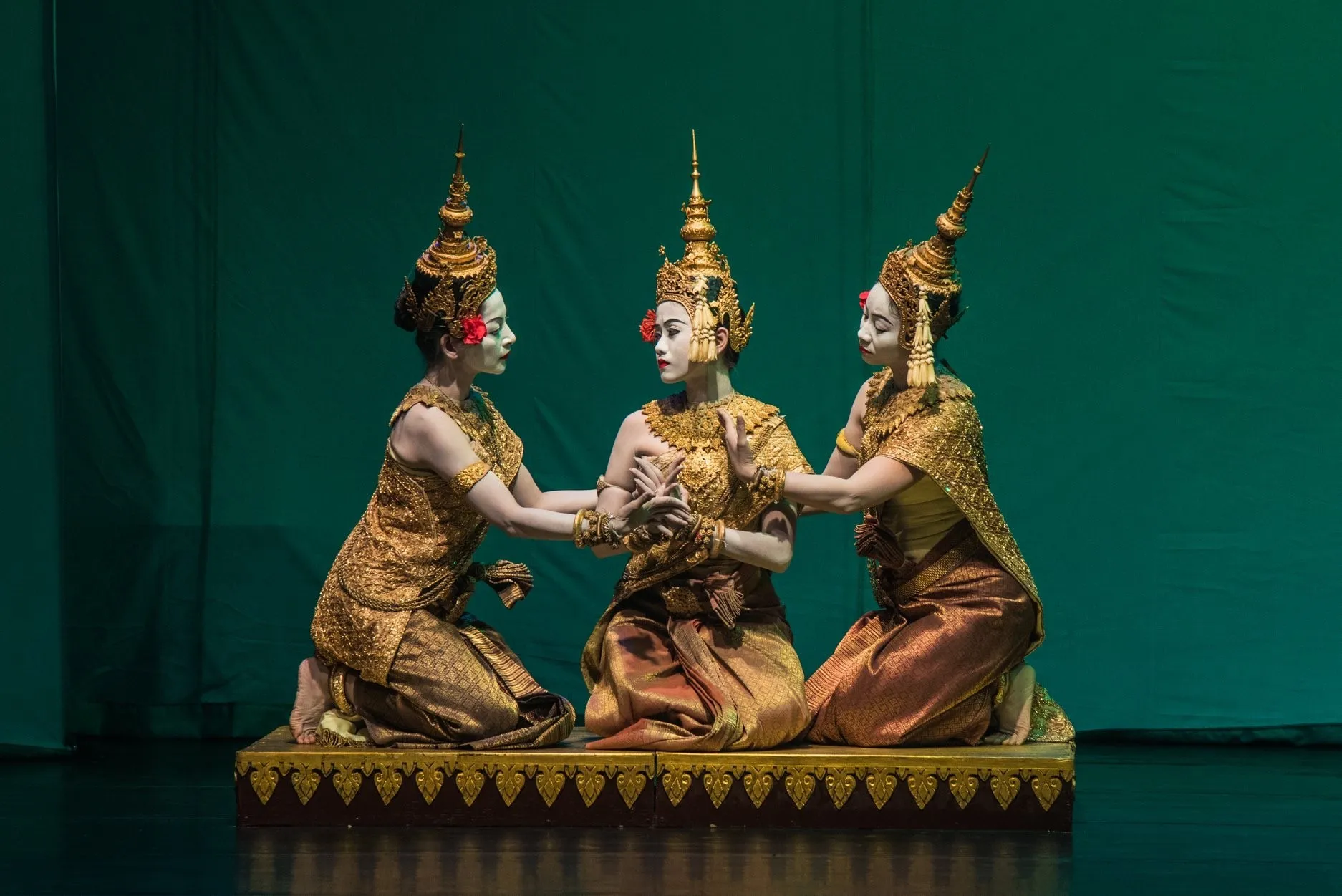
The Royal Ballet
A living Cambodian tradition
Through disciplined gesture, music, costume and storytelling, Cambodian classical dance gives form to stories and emotions carried across generations. Every role has its own movement, character and visual language.
This knowledge is learned through sustained practice and passed directly from teachers to dancers. Its continuity depends on performers who continue to study, teach and bring the form to life.
Repertoire
Four character types
UNESCO identifies four character types in the classical repertoire: Neang, the woman; Neayrong, the man; Yeak, the giant; and Sva, the monkey. Each has its own movement qualities and visual language. Serei Van Kosaun’s role is Neang. Future journal notes will look more closely at terminology, gesture and character from a practitioner’s perspective.
Neang
The woman
Delicacy built through exact movement, emotion and eye contact. Kosaun’s role.
Neayrong
The man
The male role, danced by women in the classical tradition, with its own bearing and line.
Yeak
The giant
The ogre: broad, forceful, masked, with a movement language of power.
Sva
The monkey
Agile and quick, the monkey brings wit and acrobatic energy to the Reamker.
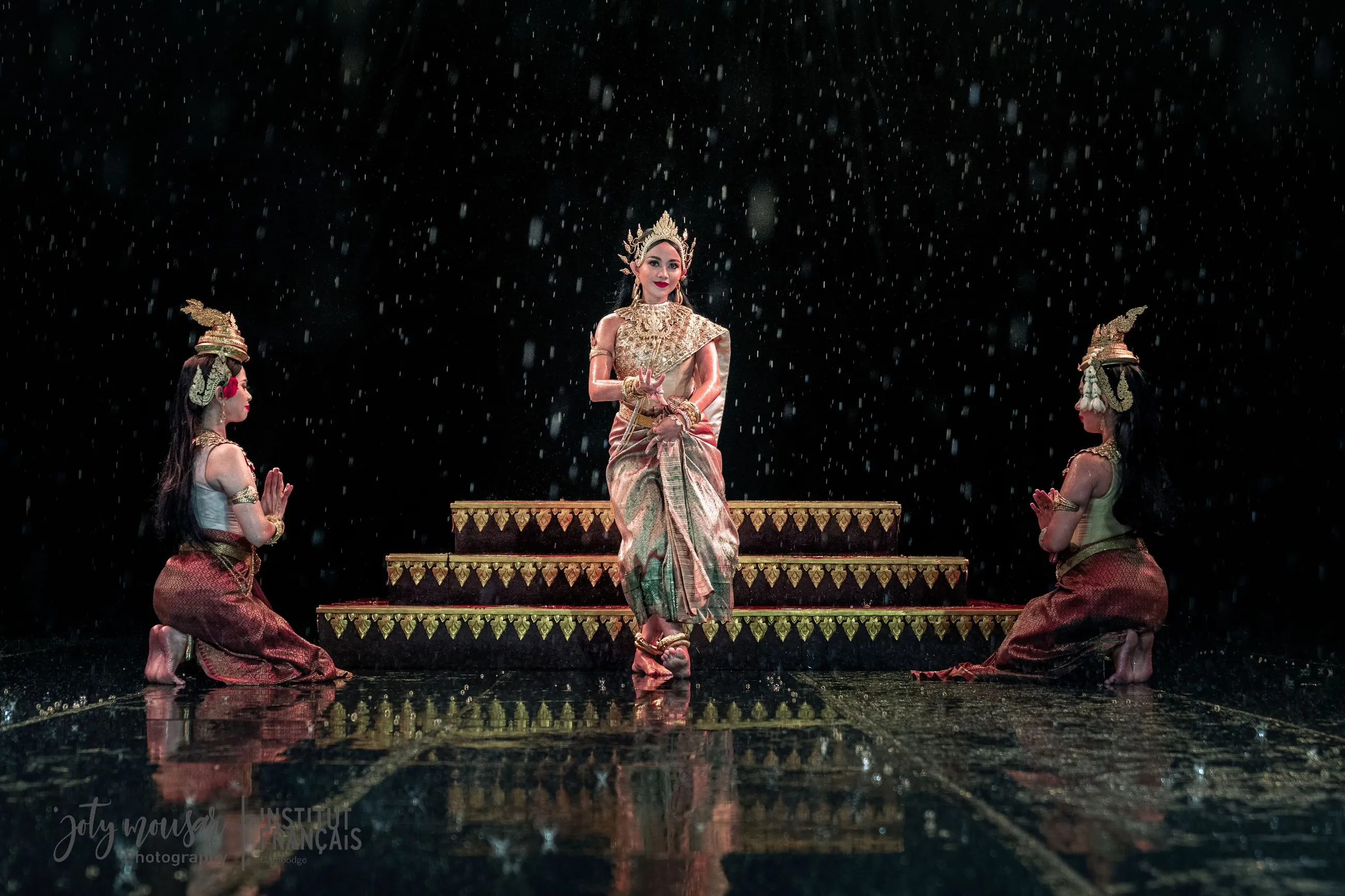
Photo: Joty Mousar · Institut Français du Cambodge
Training
What training asks of the body
Gestures and poses are not learned as isolated decorations. They are built through sustained repetition, correction and attention. The same movement can feel different as balance, line, timing and intention become clearer.
For a new student, the beginning is a foundation rather than a performance. Regular practice creates the strength and understanding from which repertoire can grow.
Source for cultural context: UNESCO Intangible Cultural Heritage — Royal Ballet of Cambodia.